

Fully Serviced Pitch Equipment: What You Need for a Complete UK Caravan Setup

Updated: Mar 3

A fully serviced pitch transforms the caravanning experience. Instead of regular trips to the service point with your Aquaroll or emptying waste containers by hand, you connect directly to mains water and drainage, enjoying the convenience of running water and effortless waste disposal throughout your stay. For many caravanners, particularly those booking longer breaks or preferring a more relaxed setup routine, serviced pitches represent the most comfortable way to tour.
But arriving at a serviced pitch without the right equipment means you cannot take advantage of what you have paid for. The pitch provides the infrastructure, but you need specific cables, hoses, and accessories to connect your caravan to it. This guide explains exactly what a fully serviced pitch offers, which components you need to use it properly, and how each piece of equipment works together to create a seamless setup.
Whether you are new to serviced pitches or simply want to ensure your kit list is complete before your next trip, this guide covers everything you need to know.
Contents
What is a Fully Serviced Pitch?
A fully serviced pitch, sometimes called a super pitch or premium pitch, provides individual utility connections directly at your caravan's location. Rather than sharing communal facilities with other pitches, you have dedicated access to three key services.
Electrical Hook Up (EHU) delivers 230V mains electricity to your caravan through a bollard or post positioned near your pitch. This powers your sockets, lighting, heating, and any appliances you bring along. Most UK sites provide a 16A supply, though some older sites may offer 10A.
Mains Water Supply comes from a dedicated tap on or near your pitch. Instead of filling an Aquaroll at a central service point, you can connect a hose directly from the tap to your caravan's water inlet, providing continuous running water without interruption.
Grey Water Drainage allows waste water from your sinks and shower to flow directly into a drain rather than collecting in a container beneath your caravan. A purpose-built drainage point, typically a gully or grid, sits within reach of your waste outlet.
Some sites also include TV aerial connections or hardstanding as part of their serviced pitch offering, though the three utilities above form the core definition.
Why Choose a Serviced Pitch?
Serviced pitches cost more than standard grass or hardstanding pitches, typically adding £5 to £15 per night depending on the site. For many caravanners, this premium delivers worthwhile benefits.
Convenience sits at the top of the list. With mains water connected, you never run out mid-shower or while washing up. Grey water drains away automatically, eliminating the need to position and empty waste containers. Your setup and pack-down routines become simpler and faster.
Longer stays become more practical. On a standard pitch, managing water supply and waste disposal requires regular attention. On a serviced pitch, you can settle in for a week or more without the daily maintenance tasks that come with container-based systems.
Comfort in all weather improves significantly. Trudging across a wet field to fill an Aquaroll loses its appeal quickly in British conditions. With mains water at your pitch, you stay dry and comfortable regardless of the forecast.
Ideal for accessibility needs. For caravanners with mobility limitations, eliminating the physical demands of water carrying and waste container handling makes touring far more accessible.
Essential Equipment for Fully Serviced Pitches
To use a fully serviced pitch properly, you need six pieces of equipment. Each serves a specific purpose, and missing any one of them means you cannot take full advantage of the facilities you have paid for.
Here is a quick overview before we examine each component in detail:
Component | Purpose | Essential For |
Electric Hook Up Cable | Connects caravan to mains electricity | All pitches with EHU |
Food Grade Water Hose | Delivers mains water to your Aquaroll | Serviced pitch water supply |
Aquaroll Water Carrier | Stores water and feeds caravan system | All pitch types |
Float Valve/Mains Adaptor | Automates Aquaroll refilling from mains | Serviced pitch water supply |
Grey Waste Hose | Channels waste water to the drain | Serviced pitch drainage |
Toilet Chemicals | Treats cassette toilet waste | All caravan toilets |
Let me explain what each component does, why you need it, and what to look for when choosing one.
1. Electric Hook Up Cable
The electric hook up cable, often simply called the EHU cable or mains lead, connects your caravan to the site's electrical supply. Without it, you have no mains power, which means no sockets, no mains lighting, and no way to run appliances like kettles, heaters, or phone chargers from the 230V system.
What It Does
The cable runs from the site bollard to your caravan's external mains inlet. One end features a blue CEE 16A plug that connects to the bollard, while the other has a matching socket that plugs into your caravan. Once connected and switched on, 230V electricity flows through to your caravan's consumer unit, powering the internal ring main just as your home electrics work.
Why Quality Matters
Not all hook up cables are equal. The critical specification is the conductor size, measured in square millimetres. A proper 2.5mm² cable can safely carry the full 16A load that most UK sites provide. Thinner cables, often 1.5mm² or even 1.0mm², may overheat when drawing higher loads, creating a fire risk.
The cable should also meet BS EN 60309-2 standards for the connectors and ideally carry certification confirming its suitability for outdoor use in caravanning applications. Orange outer sheathing indicates H07RN-F grade cable, which offers superior durability and weather resistance compared to standard PVC alternatives.
Choosing the Right Length
Most caravanners find 25 metres sufficient for the majority of UK sites. This length reaches comfortably from bollards positioned at the edge of pitches without leaving excessive cable coiled on the ground. Some sites place bollards centrally between pitches, requiring less length, while others position them further away.
A 10-metre cable works for compact sites but may leave you struggling on larger pitches. A 25-metre cable covers most situations with room to spare.
Product Spotlight: For a properly specified hook up cable that meets British Standards and carries the full 16A supply safely, see our full review of the Semloh 25m Caravan Electrical Hook Up Cable.

Safety Considerations
Always uncoil your hook up cable fully before use. A coiled cable under load generates heat, and if tightly wound, this heat cannot dissipate properly. The resulting temperature rise can damage the cable insulation or, in extreme cases, cause a fire.
Check your cable before each trip for signs of damage. Cracks in the outer sheath, bent pins, or burn marks around the connectors all indicate a cable that needs replacing. Never use a damaged hook up cable.
When connecting, plug into your caravan first, then connect to the bollard and switch on. When disconnecting, switch off at the bollard first, disconnect from the bollard, then unplug from your caravan. This sequence minimises the risk of arcing at the connectors.
2. Fresh Water Hose (Food Grade)
A food grade water hose connects the pitch tap to your Aquaroll's float valve, delivering continuous mains water that automatically tops up your supply throughout your stay. This single piece of equipment, combined with the float valve, transforms your water supply from a manual filling routine into an automatic, always-available system.
What It Does
The hose runs from the tap on your serviced pitch to the float valve fitted to your Aquaroll. With the tap open, water flows through the hose and into the Aquaroll whenever the float valve opens, keeping your water supply topped up without any effort on your part. Your caravan's pump then draws water from the Aquaroll exactly as it would on any other pitch.
Why Food Grade Matters
Standard garden hoses contain plasticisers and other chemicals that can leach into water sitting in the hose. These substances create unpleasant tastes and may introduce harmful compounds into water you drink, cook with, and wash dishes in.
Food grade hoses use materials certified safe for potable water. The inner lining will not contaminate your water supply, ensuring what comes out of your caravan taps tastes fresh and remains safe for consumption. The blue colour commonly used for food grade hoses provides an easy visual identifier, distinguishing them from garden hoses at a glance.
Key Specifications
Look for reinforced construction that resists kinking. A hose that folds over and blocks flow becomes frustrating quickly, particularly when routed around awning poles or across uneven ground. Multi-layer designs typically offer better kink resistance than single-wall alternatives.
A 10-metre length suits most serviced pitch layouts. Pitch taps usually sit within a few metres of your caravan position, and 10 metres provides comfortable reach with slack for neat routing. For sites with more distant tap positions, carrying a second hose or a longer single length may prove necessary.
Standard 12mm (half-inch) internal diameter works with virtually all UK site taps and caravan inlets. Ensure your hose comes with compatible connectors, or purchase them separately. Click-lock style fittings provide secure, leak-free connections that release easily when packing away.
Product Spotlight: The MYPURECORE Premium Food Grade Water Hose offers a complete 10m kit with all necessary connectors for immediate use on serviced pitches.

Storage and Maintenance
Drain your water hose thoroughly before storing. Water left sitting inside can develop bacterial growth, particularly in warm conditions. Store the hose loosely coiled in a dedicated bag or container to keep it clean and prevent damage from other items in your locker.
At the start of each season, flush the hose through with fresh water before connecting it to your caravan. This clears any dust or debris accumulated during storage and ensures clean water reaches your system from the first use.
3. Aquaroll Water Carrier
Your Aquaroll sits at the heart of your serviced pitch water setup. If you already tour on standard pitches, you almost certainly own one. The good news is that this same piece of equipment forms the basis of your mains water connection, meaning you need minimal additional kit to take full advantage of a serviced pitch.
What It Does
The Aquaroll stores fresh water and transports it from filling points to your caravan. Its distinctive barrel shape allows it to roll along the ground rather than requiring lifting, making the task of moving 40 litres of water far more manageable. A submersible pump inside the Aquaroll pushes water through to your caravan's system when connected to the external inlet.
Why the Aquaroll Remains Central to Serviced Pitch Setup
You might assume that a serviced pitch means connecting the mains water supply directly to your caravan. However, this approach carries significant risks. UK mains water pressure varies considerably between sites and can easily exceed what your caravan's plumbing system is designed to handle. Seals, joints, and flexible pipes that work perfectly with pump-fed water can fail under continuous mains pressure, leading to leaks or flooding inside your caravan.
The solution is elegantly simple: connect the mains supply to your Aquaroll using a float valve, then use your existing pump to feed water to the caravan as normal. This approach delivers several important benefits.
Pressure protection keeps your caravan's water system safe. The Aquaroll sits at atmospheric pressure, and your pump delivers water at the gentle pressure your caravan was designed for. Mains pressure never reaches your internal plumbing.
Minimal additional equipment makes this the most practical solution. You already own the Aquaroll and pump. Adding a float valve and food grade hose gives you everything needed for serviced pitch water supply without duplicating equipment.
Bulk storage provides resilience. With 20 to 40 litres of water in the Aquaroll at any time, you have an immediate reserve if the mains supply is interrupted. A burst hose, failed tap, or site-wide water issue does not leave you without water.
Freeze resistance improves in cold weather. A full Aquaroll has significant thermal mass, meaning it takes longer to freeze than water sitting in an exposed hose. While you should still take precautions in freezing conditions, the stored water provides a buffer that direct mains connection cannot match.
Touring flexibility means one setup works everywhere. If you visit a mix of serviced and standard pitches during a tour, the Aquaroll approach means your water system works identically at each stop. On serviced pitches, the float valve keeps it topped up automatically. On standard pitches, you fill it manually at the service point. Your caravan connection remains unchanged.
Choosing an Aquaroll
The 40-litre capacity suits most touring caravanners, providing enough water for a day or two of normal use while remaining manageable to move when full. Larger 50-litre versions exist for those wanting extended capacity, though the additional weight when full requires more effort to transport.
Premium versions feature superior materials and construction, offering longer service life and better resistance to algae growth. Economy alternatives work adequately but may need replacing sooner.
Product Spotlight: The British-made Hitchman Aquaroll 40L has become the standard choice for UK caravanners, offering proven reliability and widespread parts availability.
4. Float Valve and Mains Adaptor
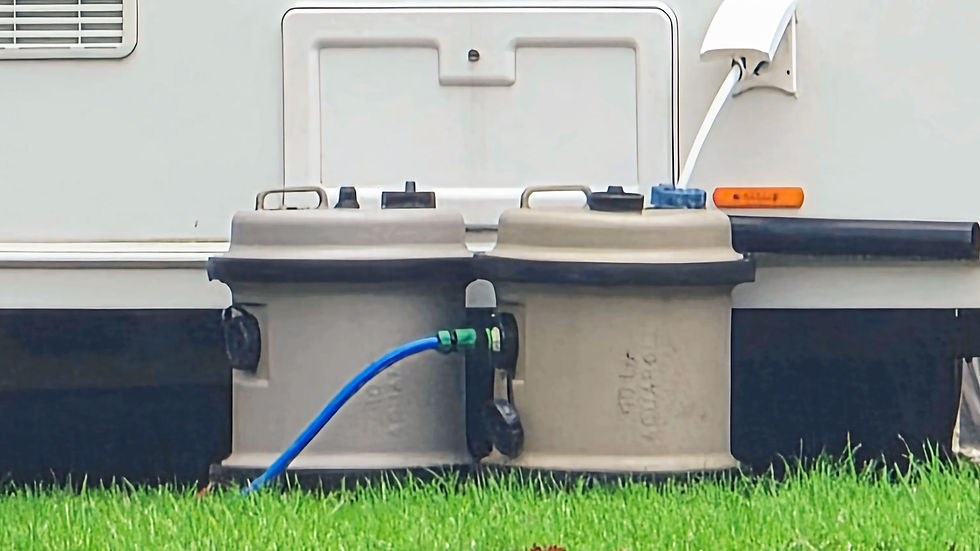
The float valve is the key component that transforms your standard Aquaroll setup into an automated serviced pitch water system. This single addition connects the mains water supply to your Aquaroll, keeping it topped up continuously without any intervention from you.
What It Does
The float valve screws into the side opening of your Aquaroll, replacing the standard blanking cap. Your food grade water hose connects from this valve to the pitch tap. As you use water inside the caravan and the level in the Aquaroll drops, the float falls and opens the valve, allowing mains water to flow in. When the water reaches the correct level, typically around 20 litres, the float rises and closes the valve automatically.
Your caravan's submersible pump sits in the Aquaroll as normal, drawing water through to your taps and shower. The pump operates exactly as it would with a manually filled Aquaroll, meaning no changes to your caravan's internal system and no exposure to mains pressure.
Why This Approach Works Best
The float valve system represents the most practical solution for serviced pitch water supply for several reasons.
Cost effectiveness stands out immediately. You already own the Aquaroll and pump. The float valve and water hose are the only additional purchases needed, making this far cheaper than buying specialised mains pressure regulators or direct connection systems.
Simplicity means fewer things to go wrong. The float valve mechanism is straightforward and reliable. There are no electrical components, no complex pressure regulation systems, and no modifications to your caravan required.
Safety comes built in. Your caravan's water system never sees mains pressure. The Aquaroll acts as an open tank at atmospheric pressure, and your pump delivers water exactly as designed. This eliminates any risk of pressure-related damage to seals, joints, or flexible pipes inside your caravan.
Consistency across pitch types keeps your routine simple. Whether you stay on serviced pitches, hardstanding with EHU only, or basic grass pitches, your water system connection to the caravan remains identical. Only the source changes: mains via float valve, or manual filling at the service point.
Installation and Use
Setup takes just a few minutes. Screw the float valve into your Aquaroll's side opening, ensuring a watertight seal. Connect your food grade hose from the valve to the pitch tap using the appropriate connectors. Position the Aquaroll near your caravan's water inlet and connect your pump as normal.
When you turn on the pitch tap, water flows into the Aquaroll until the float rises and closes the valve. From this point, the system is self-regulating. Use water inside your caravan, and the Aquaroll automatically refills to maintain its level.
Check occasionally that the float valve is operating correctly. A sticking float may fail to close, causing overflow, or fail to open, leaving you without automatic refilling. Most issues resolve by ensuring the float moves freely and the valve seat remains clean.
Product Spotlight: For hands-free water management on serviced pitches, see our review of the Mains Water Adaptor for Aquaroll, which includes the float valve and food grade hose needed for immediate setup.

5. Grey Waste Hose
Grey water, the used water from your sinks, shower, and potentially your washing machine if fitted, needs somewhere to go. On a serviced pitch, a dedicated drain accepts this waste water, but you need a hose to channel it there.
What It Does
The grey waste hose connects your caravan's waste outlet pipes to the pitch drainage point. Water flowing from your sinks and shower travels through this hose and into the drain, eliminating the need for a waste container sitting beneath your caravan.
Why Proper Drainage Matters
Without drainage, waste water collects in a portable container, typically a Wastemaster or similar wheeled tank. This container fills surprisingly quickly with normal use, requiring regular emptying trips to the service point. During wet weather or when you are using more water than usual, the container may need emptying multiple times daily.
A connected waste hose drains continuously. You can shower, wash up, and use water freely without worrying about container capacity or scheduling emptying trips into your day.
Choosing a Waste Hose System
Look for a system that connects easily to your caravan's waste outlets. Most modern caravans have one or two 28mm waste pipes emerging from beneath the floor. A good waste hose kit provides connectors that push onto these pipes securely, channelling both outlets into a single hose that runs to the drain.
Ribbed or corrugated construction helps the hose maintain its shape and prevents kinking. The hose needs enough flexibility to route from your caravan to the drain point, which may require bending around obstacles or dropping into a gully below ground level.
Length requirements vary depending on drain positioning. Most serviced pitches place the drainage point within a couple of metres of typical caravan positions, so a 3 to 5 metre hose handles most situations comfortably.
Product Spotlight: The Twin Caravan Waste Water Outlet Kit provides everything needed to connect both waste outlets to a single drainage hose.

Installation Tips
Position your waste hose with a consistent downward slope from caravan to drain. Water flows by gravity alone, so any low points or upward sections in the hose will trap water and potentially cause blockages or overflows.
Secure the hose at the drain end to prevent it slipping out. Some drains have built-in hose retainers, while others may need a weight or peg to hold the hose in position.
Check the connection at your caravan's waste outlets regularly. These push-fit connections can work loose over time, particularly if the hose moves or catches on something. A loose connection means water draining onto the ground beneath your caravan rather than into the hose.
6. Toilet Chemicals
Your caravan's cassette toilet operates independently from the grey water system. Waste from the toilet collects in a removable cassette that you empty at the site's chemical disposal point, commonly called an Elsan point. Toilet chemicals ensure this system functions hygienically and remains pleasant to use.
What They Do
Toilet chemicals perform two essential functions. They break down solid waste, making the cassette easier to empty and clean. They also control odours, preventing unpleasant smells from escaping the cassette and entering your caravan's living space.
Without chemicals, waste sits in the cassette unchanged, creating emptying difficulties and significant odour problems. Proper chemical treatment makes the whole process far more manageable.
Types of Toilet Chemical
Blue chemicals represent the traditional approach. They use formaldehyde-based formulas that effectively break down waste and control odours. However, blue chemicals require disposal at dedicated chemical waste points and cannot be emptied into standard drains or toilets.
Green chemicals offer an environmentally friendly alternative. These formaldehyde-free formulas use biological or enzyme-based processes to break down waste. Crucially, green chemicals can be disposed of at any waste point, including standard toilets and some natural drainage systems where permitted. This flexibility proves particularly valuable when touring sites with limited chemical disposal facilities.
Pink chemicals serve a different purpose entirely. Added to your toilet's flush tank rather than the cassette, pink fluid keeps the bowl clean, lubricates the blade seal, and leaves a fresh scent with each flush. While not strictly essential, pink fluid helps maintain your toilet in good condition.
Choosing the Right Chemical
For most UK touring, green chemicals offer the best balance of effectiveness and convenience. They work well in all conditions, cause no disposal headaches, and align with the environmental expectations of many modern campsites.
Some caravanners prefer blue chemicals for their slightly stronger odour control in hot weather, accepting the disposal limitations as a reasonable trade-off.
Whichever type you choose, follow the manufacturer's dosage instructions. Under-dosing reduces effectiveness, while over-dosing wastes product without improving performance.
Product Spotlight: For a formaldehyde-free solution that works effectively on every site, see our review of Elsan Organic Caravan Toilet Fluid.

Recommended Products at a Glance
Product | Type | Key Benefit | Rating | Review |
Semloh 25m Hook Up Cable | Electric Cable | Genuine 2.5mm² copper, meets BS standards | 4.5/5 | |
MYPURECORE 10m Hose | Water Hose | Complete kit with all connectors included | 4.2/5 | |
Hitchman Aquaroll 40L | Water Carrier | British-made, proven reliability | 4.5/5 | |
Mains Water Adaptor | Float Valve | Hands-free refilling, easy setup | 4.3/5 | |
Twin Waste Outlet Kit | Grey Waste | Connects both outlets, neat routing | 4.2/5 | |
Elsan Organic | Toilet Chemical | Formaldehyde-free, universal disposal | 4.4/5 |
Setting Up on a Serviced Pitch: Step by Step
Arriving at a serviced pitch with all the right equipment means setup proceeds smoothly. Here is a logical sequence that gets you connected efficiently.
Step 1: Position and level your caravan. Before connecting any services, ensure your caravan sits level and stable. Use your corner steadies or motor mover to achieve a level position, checking with a spirit level if needed.
Step 2: Connect the electric hook up. Uncoil your cable fully, plug into your caravan's inlet first, then connect to the bollard and switch on. Check your caravan's consumer unit to confirm power is flowing, then test a socket or light inside.
Step 3: Set up your water supply. Position your Aquaroll near your caravan's water inlet. If you have not already done so, fit the float valve to the Aquaroll's side opening. Connect your food grade hose from the pitch tap to the float valve. Connect your submersible pump to the Aquaroll and your caravan's water inlet as normal.
Step 4: Connect the grey waste hose. Attach the hose to your caravan's waste outlets, ensuring secure connections. Route the hose to the drainage point with a consistent downward slope, and secure the end in the drain.
Step 5: Prepare your toilet. Add the appropriate dose of chemical to your cassette and a small amount of water to activate it. If using pink fluid, add this to your flush tank and top up with fresh water.
Step 6: Turn on the water. Open the pitch tap and check for leaks at the hose connections and float valve. The Aquaroll will begin filling. Once it reaches the float level, the valve will close automatically. Turn on your caravan's water pump, then open each tap briefly to clear air from the system and confirm water flows correctly.
Step 7: Test the drainage. Run water from your kitchen sink and check it flows through the waste hose to the drain. Check the connection points remain secure and the hose maintains its slope.
You are now fully connected and ready to enjoy your serviced pitch.
Common Mistakes to Avoid
Even experienced caravanners occasionally make errors when setting up on serviced pitches. These common mistakes can cause frustration, damage, or simply reduce the convenience that serviced pitches should provide.
Connecting mains water directly to the caravan. Without pressure regulation, mains water can damage your caravan's plumbing system. Always use the Aquaroll with float valve approach to protect seals, joints, and flexible pipes from excessive pressure.
Using a coiled hook up cable. A partially uncoiled cable under load generates heat that cannot escape. Always fully uncoil your cable, even if the bollard sits close to your caravan.
Connecting a garden hose instead of food grade. The initial cost saving disappears quickly when your tea tastes of plastic. Always use a hose rated for potable water.
Forgetting to slope the waste hose. Grey water will not flow uphill. If your hose has dips or rises, water pools and eventually overflows at the lowest connection point.
Leaving the mains water on overnight in freezing conditions. Water in an exposed hose freezes, blocking flow and potentially splitting the hose. Either disconnect overnight or insulate thoroughly.
Over-filling the toilet cassette. Chemicals work best with the recommended amount of water in the cassette. Adding too much water reduces effectiveness and means more frequent emptying.
Ignoring small leaks. A dripping connection wastes water, creates muddy patches, and can worsen over time. Fix leaks promptly rather than tolerating them.
Serviced Pitch Scenarios
Different trips call for different approaches. Here is how serviced pitch equipment adapts to various touring situations.
Weekend Break
For a Friday to Sunday stay, the convenience of serviced pitches shines. Connect everything on arrival Friday evening, enjoy hassle-free facilities all weekend, and disconnect Sunday morning with minimal fuss. The premium cost of a serviced pitch spreads across just two or three nights, but the time saved on water runs and waste emptying makes it worthwhile for relaxation-focused breaks.
Week-Long Holiday
Extended stays benefit most from serviced pitches. Over seven nights, you might otherwise make a dozen trips to fill an Aquaroll and empty waste containers. With services connected, these tasks disappear entirely. The extra cost per night delivers proportionally greater value over longer stays.
Winter Touring
Cold weather complicates serviced pitch use. Consider using your Aquaroll with the float valve system rather than direct mains connection, as the shorter hose run between Aquaroll and caravan is easier to insulate or protect. Disconnect and drain hoses if temperatures drop below freezing, reverting to manual filling if necessary. Some winter tourers carry insulated hose covers specifically for this purpose.
Rally or Meet
Club rallies often use temporary sites without individual services. In these situations, your Aquaroll and waste container prove essential, with the service point serving all attendees. Your serviced pitch equipment stays in the locker until you return to a commercial site.
Frequently Asked Questions
Do I need all six items for every serviced pitch?
The electric hook up cable is essential for any pitch with EHU, serviced or not. For a true fully serviced pitch, you need the water hose, Aquaroll, and float valve working together to provide your mains water supply safely, plus the grey waste hose for drainage. Toilet chemicals are needed regardless of pitch type. If you already tour on standard pitches, you likely own everything except the float valve and food grade hose.
Can I use my serviced pitch equipment on standard pitches?
Absolutely. Your electric cable works identically on any EHU pitch. Your Aquaroll serves as your primary water supply on non-serviced pitches. Your waste hose can direct grey water into a Wastemaster or similar container. Nothing goes to waste.
How do I know if a pitch is fully serviced?
Sites clearly indicate serviced pitches in their booking systems and pitch maps. Look for terms like "fully serviced," "super pitch," "premium pitch," or "all-service pitch." If unclear, contact the site directly before booking to confirm what facilities the pitch includes.
Is direct mains connection safe for my caravan?
Connecting mains water directly to your caravan without pressure regulation is not recommended. UK mains pressure varies significantly between sites and can exceed what your caravan's plumbing was designed to handle, risking damage to seals, joints, and flexible pipes. The Aquaroll with float valve approach described in this guide protects your caravan by maintaining atmospheric pressure in the water system while still providing automatic, continuous water supply. This is why I recommend this setup for all serviced pitch stays.
What length hoses should I buy?
A 25-metre electric cable and 10-metre water hose cover the vast majority of UK serviced pitches. Grey waste hoses of 3 to 5 metres typically reach drainage points comfortably. Carrying connectors to join hoses provides flexibility for unusual site layouts.
Can I leave services connected when I go out for the day?
Yes, though some caravanners prefer to turn off the water at the pitch tap when away for extended periods. This prevents potential flooding if a connection fails while you are absent. Electrical supply can remain connected safely.
Do I need different chemicals for serviced and non-serviced pitches?
No. Your toilet chemicals work identically regardless of pitch type. The cassette system operates independently from the pitch services.
Checklist: Serviced Pitch Essentials
Before your next trip to a serviced pitch, confirm you have:
[ ] Electric hook up cable (25m recommended)
[ ] Food grade water hose (10m recommended)
[ ] Aquaroll or equivalent water carrier
[ ] Float valve and mains adaptor (optional but recommended)
[ ] Grey waste hose with connectors
[ ] Toilet chemicals (blue or green for cassette, pink for flush tank)
[ ] Spare hose connectors
[ ] PTFE tape for threaded connections
With this equipment packed and ready, you can arrive at any fully serviced pitch confident that you have everything needed to connect and enjoy the facilities you have paid for.
Summary
A fully serviced pitch offers genuine convenience for UK caravanners willing to invest in the right equipment. The combination of mains electricity, continuous water supply, and direct drainage eliminates the routine maintenance tasks that punctuate stays on standard pitches.
The six essential components, including your electric hook up cable, food grade water hose, Aquaroll, float valve system, grey waste hose, and toilet chemicals, work together to create a setup that rivals home comforts. Each piece serves a specific purpose, and having quality versions of each ensures reliable performance trip after trip.
Whether you are new to serviced pitches or upgrading tired equipment, the products recommended in this guide represent dependable choices that deliver genuine value. They are the items I trust and recommend to caravanners at all experience levels.
For detailed information on any specific product, follow the review links throughout this guide. Each review covers specifications, performance, and practical considerations to help you make informed purchasing decisions.
Last updated: February 2025
Related guides:
Disclaimer
The information provided on this website is intended for general knowledge and informational purposes only. It does not constitute professional advice of any kind, including financial, legal, or medical advice. The author makes no representations or warranties as to the accuracy, completeness, or reliability of the content.
You should consult with a qualified professional before making any decisions based on the information presented here. The author is not liable for any damages or losses arising from the use or reliance on this website or its content.
External links are provided as a convenience and do not necessarily reflect the author's views or opinions. The author is not responsible for the content of external websites.
By using this website, you agree to these terms and conditions.


